


Moving Boxes, Moving Minds: What Marketing Really Means for a Removal Company in Northampton

Removal companies don’t usually feature in glossy marketing conversations. No neon slogans. No viral stunts. And honestly? That’s fine. Because when you run a Northampton moving company, marketing isn’t about shouting. It’s about being remembered at exactly the right moment — when someone’s staring at half-packed boxes and thinking, Who do I trust with my life in cardboard form?
Here’s the thing: removals and marketing have more in common than they let on. Both are practical. Both are slightly stressful. And both work best when they feel calm, human, and reliable.
Local Isn’t a Buzzword — It’s a Shortcut to Trust
Northampton isn’t London. It doesn’t behave like London, and it doesn’t want to be sold to like London either. People notice if you know the difference between Abington and Duston. They clock whether you understand narrow terraces, awkward parking, and the fact that moving in February rain is a very different job to moving in July sun.
Good marketing for a Northampton removal company leans into that familiarity. Not with chest-thumping claims, but with quiet signals:
-
Photos of real streets, not stock images
-
Language that sounds like it’s spoken locally
-
Mentions of schools, estates, and timing around term dates
You know what? People don’t want “the biggest.” They want the one who’s done this street before.

The Van Is a Billboard (Whether You Like It or Not)
Marketing doesn’t stop once the job’s booked. In fact, that’s when it gets interesting.
A clean van, clear branding, tidy uniforms — they’re not vanity details. They’re reassurance. Neighbours notice. Someone always asks, “You moving out?” And just like that, your team becomes a rolling recommendation.
It’s the same reason reviews matter so much. A five-star Google review isn’t about ego; it’s social proof doing the heavy lifting while you’re busy carrying wardrobes down stairs. And yes, asking for reviews can feel awkward. But most customers are happy to help if the move went smoothly. They remember the relief.
Digital Marketing, Minus the Noise
No need for fancy jargon here. For most removal companies in Northampton, digital marketing boils down to a few essentials done well.
Google Business Profile. Facebook community groups. A simple website that loads fast and answers real questions — prices, availability, what happens if it rains (because it will). Add WhatsApp for quick quotes and suddenly you feel accessible, not corporate.
Honestly, people aren’t browsing removals for fun. They’re stressed, short on time, and looking for clarity. Marketing that respects that wins.

Old-School Still Has a Place (Yes, Really)
Here’s the mild contradiction: marketing isn’t everything. Sometimes it’s a quiet chat with a local estate agent. Or a builder who passes your name along. Or a flyer pinned to a noticeboard in a shop that’s been there longer than most startups.
Word of mouth still works — especially in towns like Northampton where reputation lingers. One bad job travels fast. A good one? Even faster, just quieter.
Seasons, Timing, and a Bit of Patience
Removals are seasonal. Marketing should be too. Summer is frantic; winter is reflective. Smart companies adjust their messaging, their budgets, even their tone. There’s no shame in slowing down promotions when demand is high, or gently reminding people you’re around when it isn’t.
And that’s the heart of it. Marketing for a removal company isn’t about clever tricks. It’s about consistency. Showing up. Being clear. Being decent.
Because when someone finally closes the door on their old place and climbs into your van, they’re not thinking about branding strategies. They’re thinking, I hope I picked the right people.
If your marketing quietly answers that question before they even ask it — you’re doing it right.
How Strategic Marketing Drives Success for Garage Conversion Companies in Birmingham
The Birmingham home services market is growing at a fast pace. One of the most promising markets in this sector is garage conversion. These days many people want to get the most out of their living space without having to relocate. Therefore, garage conversion experts in Birmingham help homeowners expand their livable spaces without spending too much money in the process. Nevertheless, despite such demand, positioning yourself in this competitive environment requires quality craftsmanship and strategic marketing.
In the next 60 seconds you’ll learn how marketing is central to the success of a garage conversion company in Birmingham. But most importantly you will discover the best marketing models and channels to bring you many high value customers over and over again.
Why Marketing is Important to a Garage Conversion Company
One may think that high quality work and referrals are sufficient to keep a garage conversion business afloat. Reputation is great to have but discoverability triumphs everything. Customers typically begin their buying journey by searching Google using keywords such as garage conversion Birmingham or on social media where they will find designs.
You cannot afford not to be visible in online spaces because your competitor might be and by not having a huge digital presence, you would be diverting business to them. A powerful marketing process provides:
· Brand Visibility: Customers must first know that you exist before they can know to employ you.
· Local Authority: Homeowners go with businesses that seem to be experienced in their field of work.
· Regular Prospects: Marketing must generate a regular flow of prospects, and not just periodic inquiries.
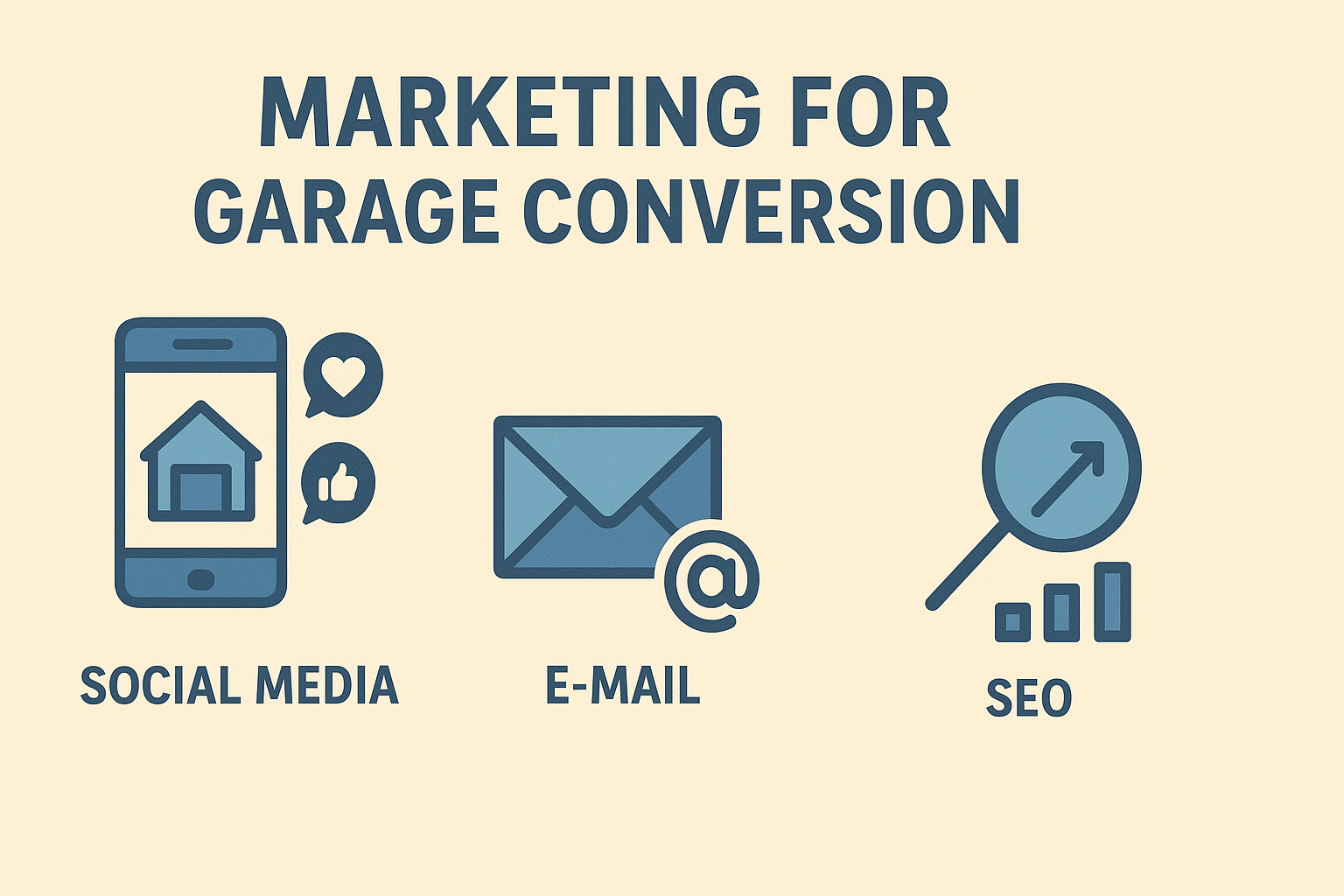
How to Do Garage Conversion Marketing in Birmingham
Marketing is a necessary step towards getting the right kind of clients and it is a way of ensuring that a garage conversion companies in Birmingham get noticed in a competitive market.
Search engine optimization
As we mentioned earlier, homeowners that need garage conversion services often begin with Google and that’s’ why local SEO is an important aspect of any plan. Optimizing the profile of your site with relevant niche keywords, creating a full-fledged profile in Google Business, and motivating customers to leave reviews can help you improve discoverability for your business.
Content marketing
Content marketing reinforces SEO with expert distribution to expand your reach. Informative blogs covering costs, construction process steps to expect and design ideas, with interesting videos and downloadable guides, can improve the reach and authority of your business. The use of social media to share project transformations/before and afters and paying to target local homeowners through paid ads gives increased visibility to any landscape project.
Pay per click advertising
Performance based advertising on Google and social media guarantees immediate visibility as it helps home services firms appear in front of high-intent customers. When such adverts are coupled with incentives like free consultation, it leads to immediate outcomes such increased number of customer inquiries. Meanwhile, you can use email marketing to stay in touch with interested customers and prospects letting them know about the latest updates and offers.
Conclusion
Besides digital marketing, there are many ways of reaching customers, such as vans with the company brand, connections with the estate agents. The best strategies merge these offline techniques with the digital models discussed above. A combination of fantastic marketing and quality workmanship will propel a local Birmingham garage conversion company into a household name in the industry.
The Value of Data Driven Marketing for Blocked Drain Businesses in Gillingham

Gillingham experiences a surge in residential plumbing complaints every rainy season. Local plumbing and drain unblocking companies, including these blocked drains specialists in Gillingham, can capture this demand if their marketing is data-driven as opposed to being reactionary and intuition-led. Data-driven marketing is customer outreach designed with real-time insights from customer needs, preferences, and market trends. In this post, we will show you how data-driven marketing can help Gillingham plumbers provide better services and thrive.
Understanding Data-Driven Marketing
Data-driven marketing involves tracking news, events, and customer habits to understand customers. In this case, events may include weather patterns, and construction activity while actions may include how often users search for keywords like “plumber near me” in Gillingham.
Armed with these insights, marketers then take precise actions such as creating campaigns that specifically meet customers at their hour of need. Organic content campaigns may revolve around informative pieces on DIY drain unblocking, prevention strategies, and when to call the experts. Pay-per-click advertising may also be leveraged to capture demand surges in seasons of rain and floods.

Conversion-Focused Content Engineering
The right content can accelerate customer acquisition and save your business from going under. Before designing conversion-focused content, data-driven marketing experts may study reports to identify customer pain points. They then set out to AB test different campaigns with variations in wording, pricing, and timing and pick the winner. The objective of this practice is “max-minima” – that is getting the biggest number of conversions using the smallest amount of budget or effort.
Retargeting and Lifetime Value Optimization
Data-driven marketing doesn’t end at the conversion stage. The best digital marketers will help you retain customers and double their lifetime value using remarketing strategies over email and social media. For instance, if customers are identified as coming from high-income households, digital marketers can help blocked drain companies upsell their services, such as hydro jetting.
Some of the metrics used in this activity include customer lifetime value (CLTV), average revenue per user (ARPU), and customer experience (CX) measured by the number of positive reviews on Google and Trust Pilot.

Example Frameworks for Execution
Here is a sample digital marketing framework for blocked drain companies in Gillingham.
Phase 1 – Foundation
Audit your existing content and digital media presence. Next, study the market and understand user needs and the content that draws them in. Tools such as Echosearch.net can help you identify high converting conversations and queries like “help unblock blocked drain near me now” and map intent clusters by urgency.
Phase 2 – Experimentation
Design content that answers the customers’ needs based on the data collected in stage 1. Optimize landing pages, send email and SMS offers, and deploy customer trust content natively using tools such as Echo Systems which helps you recruit commenters and moderators to amplify your reach. If you are running Google or Facebook ads, install Google Search Console and review Facebook Analytics to start tracking results.
Phase 3 – Reporting and Recalibration
Review data from Google search console, and Facebook analytics to track customer sentiments, conversions, and traffic. You can also track qualitative metrics such as how often your brand is mentioned online and how frequently you get your brand phrases echoed back. Continue tweaking your campaigns’ design, copy, pricing and timing until the metrics feel satisfactory.
Conclusion
The dividends of implementing data driven marketing are compounding. Targeting the right customers at the right time can slash customer acquisition costs by half or even more. With precise data from customer demographics and habits, paid and organic campaigns yield more value in customer retention and brand belief.
Why Data-Driven Marketing Is the Future (And How to Get Started)

The Rise of Data-Driven Marketing
Brands must use data-driven marketing to succeed and stand out in our digital world today. Instead of making choices based on instinct or general beliefs marketers now base their decisions on what customers reveal through data analytics and AI systems. Companies can create customized interactions while making better resource investments and adjusting their efforts right when they need it. The power to collect and use data today determines which brands will lead the market pack.
Why Data-Driven Marketing Matters
Data-driven marketing delivers many important advantages throughout all its applications. By focusing on the right target market with precise messages at optimal times businesses increase user interaction and produce better results. Personalization means more than just using a customer’s name. Our company uses actual behavior data to customize marketing materials and reach customers who match their preferences which builds stronger bonds with our customers.
Data-driven strategies also enhance decision-making. Marketers gain better results by checking performance data to see what works well and spending their budget wisely. The strategy helps us use our money better while getting the best results from our investments. Our team can make quick improvements to our campaigns because we have access to real-time data. Businesses that adopt data-driven strategies build a stronger market position because they process market changes sooner than traditional methods.
How to Get Started with Data-Driven Marketing
Moving to data-driven marketing methods does not need to feel overwhelming. This guide shows you how to start your journey to data-driven marketing.
1. Define Clear Goals and KPIs
Begin your data-driven marketing transformation by naming your marketing targets and defining the performance indicators you will follow. Keep your marketing KPIs directly connected to your enterprise objectives.
2. Collect and Integrate Quality Data
Get data from all your available channels. Your team should gather data from all digital platforms including website analytics, social media, customer relationship management systems, and email marketing tools. Integrate your customer data tools to give everyone one complete view of your customer records.
3. Invest in the Right Tools
Use Google Analytics CRM software and marketing automation tools to collect and understand data easily. Data visualization platforms help users transform hard-to-understand data into useful insights.
4. Foster a Data-Driven Culture

Teach everyone in your company to use data correctly. Help teams learn data use skills and create partnerships to make sure everyone knows how to work with data correctly.
5. Prioritize Data Quality and Security
Check your data records often to clean up mistakes while following privacy rules to protect personal customer information.
6. Personalize and Segment
Your data helps you divide your audience into groups so you can give them tailored content that matches their preferences.
7. Measure, Test, and Optimize
Check your marketing results regularly and test different options to improve your methods based on what the data shows you.
The Bottom Line
Data-driven marketing isn’t a temporary fad but the best way to achieve marketing success in the future. Brands use data to create stronger customer bonds while making better choices to produce superior outcomes. Begin with simple steps and choose appropriate tools to build a team that values data. A data-driven method will help you succeed in today’s digital market landscape if you implement it now.
Facebook Ad Bidding Changes

We recently posted about changes that are coming to Facebook’s Ads Manager. Mainly, that Facebook is saying “Goodbye” to Power Editor, and merging all of the best Power Editor features into Ads Manager. We discussed the two major changes: (1) the ability to choose between 2 workflows, and (2) the need to review your drafted items before they go live. As these changes are rolled out gradually to advertisers, and the kinks are worked out, we anticipate seeing additional changes. Today we’re going to take a look at Facebook Ad Bidding Changes that were noticed in the new Ads Manager.
What is Facebook Ad Bidding?
There are likely hundreds, if not thousands, of businesses who have YOU in their target audience. They want to get their Ad on your timeline. But, how does Facebook decide which Ad that you see?
One element of that determination relies on Facebook’s bidding system. Every time you sign on to Facebook (or navigates to your timeline) an auction takes place in a super-fast micro-second. Things like the Advertiser’s reputation and your typical behaviors on Facebook will narrow down the Ads you’ll likely see, as well as the BID that the advertiser has set for their Ads.
Unlike traditional auctions, the advertiser with the highest bid will NOT necessarily win the spot in your timeline. Rather, Facebook will look ad the bid, as well as elements related to the Advertiser, and Your likelihood to act on the Ad to make a complex determination. Facebook’s main concern is to show the right Ad to the right person at the right time – not just make more money. That being said, if your bid is too low, you will not have a chance at winning the auction. Understanding Bidding is essential for success as an advertiser.
The “Old” Facebook Ad Bidding Layout
Up until now, during the Ad creation process, you selected whether you wanted Automatic Bidding or Manual Bidding from the “Optimization & Delivery” section at the Ad Set level.
Automatic Bidding was “hands-off” and you would leave it to Facebook to keep you competitive in the marketplace. Facebook attempt to get you the most actions at the lowest cost. For most new advertisers, this was the best option.
Manual Bidding allowed you to set the limits for how much you were willing to pay per action. Unfortunately, I often saw advertisers misuse the Manual Bidding option because they did not truly understand how it worked cooperatively with their ads.
The “New” Facebook Ad Bidding Layout
Facebook has made some changes to the way we will select our Bid Strategy in the Ad creation process. It’s still found at the Ad Set level, and looks like the image below:
It’s a pretty significant change in verbiage and is bound to throw off advertisers when they encounter it in Ads Manager. But, in reality, not much has changed once you dive into it!
Lowest Cost Facebook Ad Bidding
Lowest Cost bidding is what was formerly known as Automatic Bidding. With Lowest Cost Bidding, you are telling Facebook that you want to get the most actions at the lowest cost. This bidding type is best for new advertisers who need to learn about their typical cost per action (CPA) on Facebook. It’s also great for advertisers who want to ensure they reach as many people as possible, and spend all of their budget efficiently. With lowest cost bidding, you may notice that costs rise as you spend more money.
Set a Bid Cap on your Facebook Ad Billing
Checking this box will allow you to take advantage of Lowest Cost Bidding, but put an upper limit on how much Facebook can bid. This is the same thing as the previous Manual Maximum Bid option. This is another area where I often see confusion and misuse. It’s important to recognize that costs for Facebook Ads will fluctuate based on the day of week, time of day, and competition in the marketplace. I rarely set a bid cap myself. At at the end of the day, one expensive outlier typically only brings the average cost up a little bit. I don’t personally want to risk missing the perfect person because they were priced a few cents more than I would prefer. Another potential issue will arise if you set your Bid Cap too low. It may limit (or stop) delivery of your Ad. I only recommend setting a Bid Cap if you are a seasoned advertiser who has a thorough understanding of what your typical CPAs are and how high you can go with your bid cap while maintaining your average costs and ad delivery.
Target Cost Facebook Ad Bidding
Target Cost bidding is similar to the previous Manual Average Bid option. This allows you to scale up your spend while maintaining a relatively consistent bid cost. Target Cost bidding is currently available for app install, conversion and product catalog sales campaigns. When you use Target Cost bidding, Facebook will work on finding bids close to your average. The first 50 or so may have significant variation as Facebook works to learn your audience and how to get you bids in your target range. Some bids will be higher, and some will be lower. The average should be close to the bid you set here, especially after the first 50 actions.
With Target Cost bidding you may not get the lowest cost. Facebook will be trying to bid at your target cost – even if less expensive bids are available. So, if your target cost is $5, Facebook will seek out results close to $5, even if lower bids are possible. One benefit includes reaching “more expensive” people deeper in your target audience. So, if you find that your targeting is accurate but you are not getting the conversions you expect, or an audience that typically performed well is not performing well anymore… you may want to consider using a higher target cost bid to reach more qualified people within your audience. If it’s more important to get the most people at the lowest cost, you should use the Lowest Cost Bidding instead.
It’s important to keep in mind, that if your Target Cost Bid is too low, you may not spend your full budget and your delivery may even stop. Similarly to a Bid Cap, I do not recommend Target Cost bidding unless you are an experienced advertiser who has a thorough understanding of bidding as it relates to your business and your target audience.